
How to Write a Memoir, Piece by Piece: Example Answers to Storyworth Questions (January 2026)
"Every Saturday, Dad gave me a quarter for penny candy at Miller's corner store. I'd spend twenty minutes deciding, finally choosing Swedish Fish because they lasted longest on the walk home."
That's how one grandmother answered, "What was your favorite candy as a child?" She didn't just name a candy. She captured a Saturday ritual, her father's generosity, the agony of choice, and why Swedish Fish mattered. Her grandchildren can picture that corner store, feel that quarter in their palm, taste those twenty minutes of childhood indecision.
That's what a great life story can look like.
You don't need to be a writer to create stories like this. You just need to understand what makes a memory stick. Notice what that candy answer does: it focuses on one specific moment, includes sensory details you can picture, and reveals something true about who she was as a kid. Those three elements—specificity, detail, and honesty—turn a basic fact into a story your family will return to for generations.
Whether you're writing your memoir, answering family history questions, or preserving memories for your children, the principles are the same. The answers that become family treasures aren't the longest or most polished. They're the ones that feel real, that capture a moment so clearly you can step inside it.
Here's how to write answers like that, with autobiography examples to real Storyworth questions to show you exactly what we mean.
TLDR:
- A great autobiography answer starts with one specific moment. You don't have to tackle your whole life story! You can describe just the Saturday you chose Swedish Fish, without the need to catalog every candy you ever ate.
- Use sensory details that let your family step inside the memory. What did it smell like? What could you hear? What did it feel like in your body?
- Show real emotions, even messy ones. The stories where you admit fear, embarrassment, or unexpected joy are often the ones your family will treasure most.
- Connect lessons to the moments you learned them. "Be kind" is forgettable. "I regret not speaking to my brother for two years after winning an argument," sticks.
- Let ordinary moments matter. Your Sunday morning coffee ritual or Tuesday night dinners often reveal more about who you were than the big milestones.
- Storyworth sends weekly questions by email and turns your answers into a hardcover memoir book. So you can tell your story one question at a time, one memory at a time.
Principle 1: Choose One Specific Moment (Not Your Whole Life Story)
The biggest mistake people make when answering life story questions is trying to cover too much ground too quickly. "How did you meet your spouse?" becomes a rushed timeline from the first meeting to the wedding day. "What was your childhood like?" turns into a decade-by-decade summary that says everything and reveals nothing.
Your family doesn't need the full timeline. They need one moment they can step inside.
Instead of "We met in college and dated for two years before getting engaged," try this:
"How did you meet your spouse or partner?"
"I met Sarah at a bookstore in 1987. She was blocking the mystery section, completely absorbed in Agatha Christie. I made a joke about her hogging the good stuff, and she laughed. That laugh. I can still hear it. We stood there for twenty minutes talking about whether Poirot or Marple was the better detective. I didn't get her number that day, but I went back to that bookstore every Saturday for a month until I saw her again."
Why this works: You can picture the bookstore, hear the laughter, feel the nervous energy of going back week after week. The story reveals character: hers (absorbed in books, quick to laugh) and his (persistent, a little awkward). One Saturday afternoon tells you more about their relationship than "we dated for two years" ever could.
Here's another example:
"What was one of your earliest childhood memories?"
"I remember standing in our kitchen when I was maybe four years old, watching Mom make bread. The dough was huge and white, and she let me punch it down. My whole fist disappeared into it. The smell of yeast filled the house, and I felt so important, like I was helping with something that mattered. Every time I smell bread baking now, I'm four years old again, standing on that step stool."
Why this works: One morning. One kitchen. One fist disappearing into the dough. The memory is small enough to hold in its entirety, which makes it feel true. And that last line ("I'm four years old again") shows why this moment stuck.
How Storyworth Helps You Focus
Each week, Storyworth sends one question to help you zero in on a specific memory. Instead of facing "write your life story," you get "What was your favorite candy as a child?" You answer by simply replying to the email. One question, one memory, one story at a time.
Principle 2: Use Sensory Details Over Facts
Facts tell your family what happened. Sensory details let them experience it with you.
"My grandmother made good food" is a fact. "My grandmother's kitchen always smelled like cinnamon and butter, and she'd let me lick the wooden spoon while the pie cooled on the windowsill" is a memory that feels real and immediate. The details make the difference in what you can see, hear, smell, taste, and touch.
When you answer a question about your life story, ask yourself: What did this moment feel like in my body? What sounds do I remember? What could I smell?
"What is one of your favorite meals?"
"Sunday pot roast at my grandmother's house. She'd start it before church, and when we walked in the door, the whole house smelled like onions and beef and something I couldn't name then but now know was thyme. The meat fell apart when you touched it with a fork. She served it on her good china (the plates with the tiny blue flowers), and we'd eat until we couldn't move. Then she'd bring out apple pie anyway, still warm, with vanilla ice cream melting into the crust."
Why this works: You can smell that house. You can see those blue flowers on the china. You can feel how full you were, and taste that warm pie with melting ice cream. The sensory details make it real enough to remember, even if you weren't there.
Here's another:
"What was your childhood bedroom like?"
"I shared a room with my sister until I was twelve. Our twin beds had matching yellow bedspreads that Mom made, but mine was always rumpled because I'd read under the covers with a flashlight after lights-out. The hardwood floor was cold in winter, so we'd race from bed to the heat register in the morning. There was one window between our beds, and in summer we'd prop it open with a dictionary and listen to the crickets while we fell asleep."
Why this works: The cold floor. The secret flashlight reading. The crickets through the open window. These aren't just descriptions. They're the texture of childhood. Your family can feel what it was like to be you at twelve years old.
How Storyworth Helps You Add Details
With Storyworth, you can add unlimited photos to any story in full color, at no extra cost. Often, looking at an old photo while you write helps you remember the details you thought you'd forgotten: what the room smelled like, how the light came through the window, the sound of footsteps on those hardwood floors.
Principle 3: Show Emotion Honestly (Even the Messy Parts)
The stories your family treasures most won't always be the ones where everything went perfectly. They'll be the ones where you admit what you actually felt: the fear, the embarrassment, the confusion, the unexpected joy.
Perfect stories can be forgettable. Real ones stick.
When you write about difficult moments, you give your family permission to struggle too. When you write about small joys, you show them what mattered. Honesty doesn't mean oversharing every detail. It means naming the emotion that made the moment significant.
"How did you get through unhappy times in your life?"
"After losing my job at 52, I spent three months barely leaving the house. I'd wake up with nowhere to go and feel like a failure before breakfast. Walking the dog every morning gave me a reason to get dressed. That fifteen-minute loop around the block (just me, the dog, and the same neighbors waving) kept me from disappearing completely. Small routines saved me when I couldn't see past the next day."
Why this works: The vulnerability is specific. "Feel like a failure before breakfast" captures the weight of depression without dramatizing it. The solution isn't heroic. It's a dog walk. That honesty makes the story useful, not just sad. Your family learns that survival sometimes looks like putting on shoes and walking around the block.
Here's another:
"What was one of the most romantic moments in your life?"
"The most romantic moment wasn't our wedding or an anniversary. It was a Tuesday night when I had the flu. I was miserable, lying on the couch in my rattiest pajamas, and your grandfather brought me soup he'd made from scratch. Badly. It was too salty, and the vegetables were mushy, but he'd tried. He sat with me while I ate it and didn't complain when I fell asleep during his favorite show. That's when I knew what love actually looked like."
Why this works: Romance isn't always the grand gesture. It's bad soup and staying through the boring parts. The honesty about "rattiest pajamas" and "too salty" makes the love more believable. Your family learns that real devotion shows up on Tuesday nights, not just special occasions.
How Storyworth Helps You Be Honest
Writing your stories privately, at your own pace, can make honesty easier. You can write a draft, sit with it, and decide what feels right to share. Because Storyworth preserves your authentic voice (we transcribe your phone calls verbatim, never rewriting with AI), your family gets the real you.
Principle 4: Connect Lessons to Specific Experiences
Generic wisdom sounds nice but fades fast. "Be kind to people" is something everyone's heard. "I won an argument with my brother in 1994 and didn't speak to him for two years" is a lesson your family will remember.
The difference is proof. When you connect advice to the moment you learned it, the lesson becomes real. Your family doesn't just hear what you believe. They see how you learned to believe it.
"What are the most important lessons you've learned in life?"
"I learned that being right matters less than being kind. I won an argument with my brother in 1994 and didn't speak to him for two years. I can't even remember what we fought about now, but I remember the silence at family dinners, the way Mom would look between us, hoping one of us would break first. Winning cost me time I can't get back. Now, when I feel that need to prove I'm right, I think about those empty chairs at Thanksgiving."
Why this works: The lesson emerges from loss, not from reading it in a book. The empty chairs at Thanksgiving make the cost visible. Your family learns that wisdom often comes from mistakes, and that's more valuable than pretending you always knew better.
Here's another:
"What advice would you give your 20-year-old self?"
"I'd tell my younger self to worry less about what people think. I skipped my best friend's small wedding because I thought it wasn't fancy enough. I was 23, shallow, and convinced that big events mattered more than real moments. I missed watching her marry someone she loved because I was embarrassed that it was in a backyard. We're still friends, but I can't get that day back."
Why this works: The specific shame (skipped a backyard wedding) hits harder than "I cared too much about appearances." Your family learns that showing up matters more than the setting.
How Storyworth Helps You Share Wisdom
Storyworth's question library includes prompts specifically designed to draw out the lessons you've learned: "What are the most important lessons you've learned in life?" and "What advice would you give your 20-year-old self?" The stories become your family's inherited wisdom, passed down through the specific moments that taught you what matters.
Principle 5: Capture Ordinary Moments (Not Just Milestones)
The most treasured memories aren't always the biggest events. Often, the stories your family returns to are about Tuesday afternoons or quiet rituals that defined your daily life.
Your wedding day matters, but so does the Sunday morning routine when the kids were small. The promotion was important, but so was the coffee you shared with a colleague every day for twenty years. Ordinary moments reveal who you actually are, not just what you accomplished.
When you write about the small stuff, you preserve the texture of your life. That's what disappears first when someone is gone.
"If you could hold on to just one memory from your life forever, what would that be?"
"I'd keep the memory of Sunday mornings when the kids were little. They'd climb into our bed at dawn, cold feet and all, and we'd lie there talking nonsense until someone got hungry. Those mornings felt endless. We'd make up stories about the ceiling cracks, discuss what to have for breakfast, just be together before the week started, asking things of us. I can still feel the weight of their small bodies pressed against mine."
Why this works: No special occasion. No milestone. Just a recurring Sunday morning that mattered because it was theirs. The cold feet, the ceiling cracks, the weight of small bodies make it real. Your family learns that the best memories often come from the moments you didn't think to photograph.
Here's another:
"What simple pleasures of life do you truly enjoy?"
"I love the first sip of coffee when the house is still quiet. Just me, the steam rising, and five minutes before the day starts asking things of me. I've had that same ritual for thirty years. Same mug, same spot at the kitchen table, same view of the backyard. It's nothing special, but it's mine. Those 15 minutes of peace have gotten me through more hard days than I can count."
Why this works: A daily ritual becomes a lifeline. The specifics (same mug, same spot, same view) show this isn't generic self-care advice. It's one person's actual survival strategy. Your family learns that small pleasures aren't indulgent. They're essential.
How Storyworth Helps You Capture the Ordinary
Storyworth's weekly questions often focus on everyday life: "What is one of your favorite meals?" "What simple pleasures of life do you truly enjoy?" These prompts give you permission to write about the small details that actually define a life.

Start With One Question
Your family is waiting for these stories. The grandmother who spent twenty minutes choosing Swedish Fish. The kitchen that smelled like cinnamon and butter. The Sunday mornings with cold feet and ceiling cracks. None of these people sat down to write their autobiography. They answered one question at a time. Start this week. Pick one memory. Write it like you're talking to someone who cares. That's all it takes.
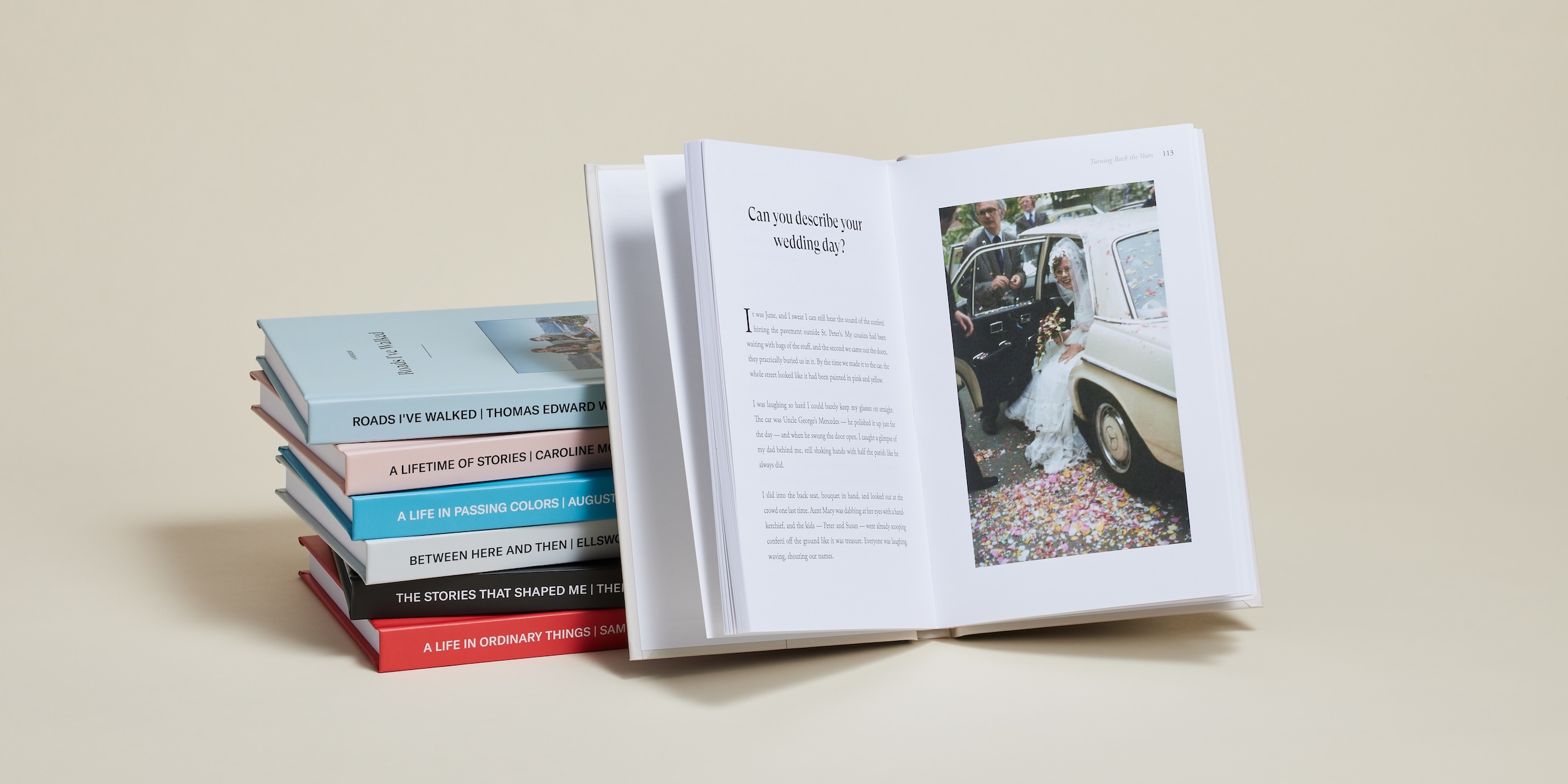
That's how Storyworth works. Each week, we send one question by email. You answer however feels easiest: reply to the email, type on our website, or request a phone call and we'll transcribe your words into your memoir. You can add photos and edit or add to stories as you go. After a year of weekly stories, we compile everything into a beautiful hardcover memoir book.
We've helped families preserve over 35 million stories in more than 1 million books since 2013. We're family-owned, independent, and built to last. Your stories stay private, owned by you, never used for advertising.
Often, the hardest part is getting started. We make the process easy by breaking it into bite-sized pieces. Answer your weekly question like you're talking to someone who cares. Don't worry about perfect grammar or literary polish - you can use our Magic Editor to proofread your writing in seconds. Just capture the moment: what you saw, what you felt, why it mattered.
Your family is waiting for these stories. Storyworth makes it easy to give them what they'll treasure most. Try it for yourself today.
FAQ
How long should each answer or story be?
There's no required length. Write as much or as little as feels right for each memory. Most people find that once they start writing, they naturally include more details than they expected, often writing several paragraphs per story as one memory triggers another.
Can I write my autobiography even if I don't think my life is interesting enough?
Your everyday experiences are exactly what future generations will want to know. The "ordinary" details (what your neighborhood looked like, how you spent weekends, what made you laugh) are the stories that disappear fastest and matter most to your family.
What if I prefer talking to writing?
You can request a call from Storyworth at any time and tell a story over the phone, even on a landline. We'll transcribe your words verbatim in your authentic voice and add the story to your memoir. After the call, you or your family can edit the transcription if needed and add photos and captions to bring the story to life.
Can I add photos to my stories?
Yes. You can add unlimited photos to any story in full color at no extra cost. Photos help bring your memories to life and often trigger additional details you might have forgotten. They print beautifully in the final hardcover book.
Can I edit my stories after I've written them?
Absolutely. You can edit any story at any time, even after your subscription year ends. Many people go back and add details, fix typos with our Magic Editor, or rearrange the order of their stories before printing their book.