
Autobiographical Story Guide (December 2025)
Some memories stay sharp for decades, while others fade quietly over time. An autobiographical story is a way of holding onto those moments by writing about your own life in your own words. It might cover your entire life or focus on a single chapter that mattered deeply.
What defines it is perspective: you are both the storyteller and the subject. This guide explains what an autobiographical story is, how it differs from memoirs and biographies, and how to begin writing one without feeling overwhelmed. Along the way, you will see practical examples and approaches that help turn personal memories into a story worth preserving, whether you’re capturing them on your own or using a service like Storyworth to guide the process and compile your stories.
TLDR:
- An autobiographical story is a first-person narrative about your own life
- It blends lived experiences with personal reflection and meaning
- Writing about your life can support emotional processing and self-understanding
- Storyworth helps people write their stories gradually through weekly prompts and turns them into a hardcover memoir
What Is an Autobiographical Story?
An autobiographical story is a narrative you write about your own life. Unlike a biography, which is written by someone else, an autobiographical story reflects your personal point of view and lived experience. These stories can be short or long, covering anything from a single memory to an entire lifetime.

Autobiographical writing isn’t reserved for public figures or dramatic lives. Everyday experiences, falling in love, raising children, changing careers, or building traditions often reveal just as much about a person as major milestones. Services like Storyworth can help structure these stories and provide prompts that make it easier to remember and record them, even if you haven’t written much before.
The Main Types of Autobiography
Autobiographical stories can take different forms depending on what you want to share. Common approaches include:
- Thematic: Focuses on a specific topic such as family, work, travel, or service
- Spiritual: Traces personal beliefs, values, or changes in meaning over time
- Intellectual: Shows how education, ideas, or a worldview developed
- Lightly fictionalized: Alters names or details for privacy while remaining grounded in real experience
Most people naturally blend these styles. Mixing approaches often leads to a story that feels more authentic than following a rigid structure.
Autobiography vs. Memoir vs. Biography
When writing about a life, it helps to understand the subtle differences between autobiographies, memoirs, and biographies. Each serves a unique purpose and spotlights different aspects of a story. Choosing the right approach can guide how you organize your memories and what details to include.
Many personal stories fall somewhere between autobiography and memoir. Writers often focus on meaningful seasons, relationships, or turning points. This flexibility makes the writing process more approachable and engaging.
For example, you might choose a memoir-style approach to focus on a particular theme or life lesson.
At the same time, an autobiography is ideal if your goal is to record your life’s events in full detail. Even when you’re not famous, blending these approaches can help create a story that feels authentic and deeply personal.
The Psychology Behind Autobiographical Storytelling
Writing about your life does more than preserve memories. Research on expressive writing shows that putting experiences into words helps people process emotions, strengthen identity, and reduce stress. Unlike merely thinking about the past, writing encourages clarity and emotional resolution, assisting people to make sense of events and even process traumatic memories by organizing fragmented experiences into a coherent narrative.
Key Elements of an Autobiographical Story
You do not need perfect recall or literary training to write a meaningful autobiographical story. Most compelling pieces share a few qualities:
- First-person voice: Writing in “I” brings readers closer to your experience
- Specific details: Small sensory moments make stories vivid and believable
- Emotional honesty: Meaning matters more than perfect dates or exact wording
Prompt-based writing can help surface these details by focusing your attention on one memory or theme at a time. Storyworth’s weekly questions are designed to do exactly that, helping writers capture sensory moments and emotional truths without feeling overwhelmed.
How to Write Your Autobiographical Story
Starting is often the hardest part. Many people feel pressure to capture their entire life at once, which can stall progress before it even begins. A more approachable way to start is to break your story into small, manageable moments in place of trying to write everything at once.
This is where guided storytelling can help. Instead of staring at a blank page, you respond to a single prompt that helps you reflect on a specific memory or chapter of your life.
You can reply however feels most natural: by writing your response, typing it online, or even speaking your answer over the phone so it can be transcribed for you. There is no pressure to be perfect, and you can always skip, edit, or return to questions later.
Over time, these individual responses begin to form a complete story. By the end of the process, those memories are compiled into a professionally printed hardcover book, creating a personal record of your life told in your own words.
Common Challenges in Writing About Your Life
Many people worry they will “get it wrong” or do not know where to begin. Two concerns show up often:
- Blank page anxiety: Facing an open document with no guidance can feel intimidating. Prompt-based writing avoids this by giving you one focused question at a time.
- Trying to include everything: Feeling responsible for every detail can lead to burnout. It is more helpful to choose meaningful moments and return to the project regularly than to aim for a perfect, all-inclusive record.
Readers care far more about your voice and your perspective than about perfect dates or word-for-word dialogue. Your memories, as you recall and interpret them, are what your family will treasure.
Preserving Your Autobiographical Story for Future Generations
Writing your story is valuable on its own, but printing it turns that work into a physical gift your family can hold. Digital files can be misplaced or locked behind changing formats, while a bound book sits on a shelf, ready to be pulled down and shared.

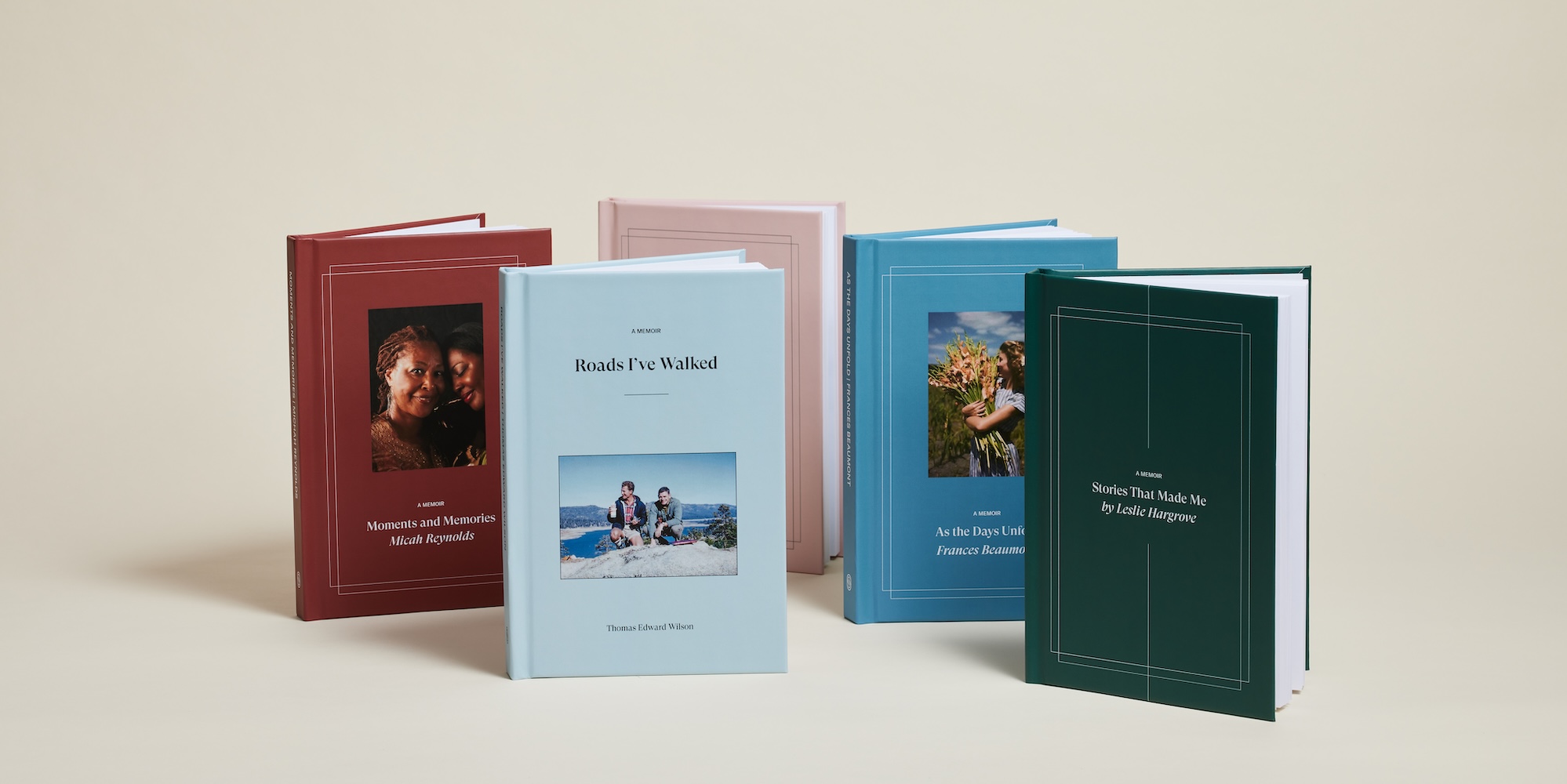
With Storyworth, a year of questions and stories culminates in a high-quality hardcover book that can include photos throughout. Your book is printed with archival quality materials designed to last, so children, grandchildren, and future relatives can open it and hear your voice on every page.
Final Thoughts on Your Autobiographical Journey
The heart of autobiographical writing is honesty, not perfection. Storyworth breaks the process into weekly questions that help you uncover memories you might not have thought about in years, turning scattered moments into a cohesive narrative. Your family wants to know your story in your own words, the everyday details, the turning points, and the lessons you have learned along the way. Taking it one memory at a time is enough. Before long, you will see a full memoir taking shape, ready to be shared and passed down.
FAQs
How do I start writing my autobiography if I don't know where to begin?
Start with a single memory instead of your entire life story. Storyworth sends one question each week, so you can respond to one prompt at a time and gradually build your book without facing a blank page.
What is the difference between autobiographical memory and regular memory?
Autobiographical memory is the part of your memory that stores your own life story. It combines specific events, such as your first day at a new job, with general facts, such as the town where you grew up, helping you understand how your past shaped who you are today.
Can I write an autobiography even if I'm not famous or don't have an exciting life?
Yes, every life contains meaningful stories worth preserving. Your autobiography doesn't need dramatic events; simple moments like meeting your spouse, a favorite recipe, daily routines, personal challenges, or family traditions create a complete picture that future generations will treasure and enjoy reading for years to come.
How long does it typically take to write a complete autobiography?
With Storyworth, you receive one question per week for a year, making the process manageable and enjoyable. By answering weekly prompts at your own pace, your stories naturally accumulate into a complete memoir without the pressure of writing everything at once.
What should I do if I can't remember exact dates or details from my past?
Focus on the emotional truth and sensory details you do remember, and not on perfect accuracy. Your unique perspective and authentic voice matter more to readers than precise historical data, and approximations are perfectly acceptable in autobiographical writing. Sharing small anecdotes or feelings often adds even more depth and personal connection.
